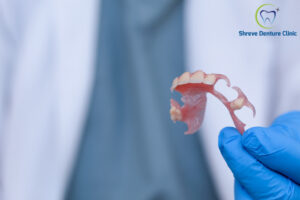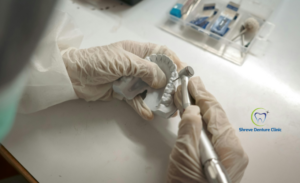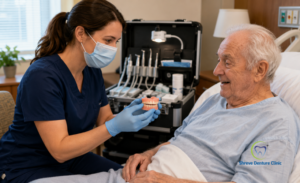

Upper and lower dentures both replace missing teeth, but they differ in stability, shape, fit and comfort, and long-term performance.
Upper dentures: use the roof of your mouth to create a suction seal that holds the denture in place. Lower dentures rest on a narrow bone ridge and share space with the tongue, which makes them a greater dental issue for patients to manage.
These removable replacement teeth come in two main forms complete dentures for patients missing all upper or lower teeth, and partial options for those who still have some natural teeth remaining.
Understanding the differences between these two types of denture options helps you choose the right treatment options and replacement options for your smile.
This guide explains 5 key differences between upper and lower dentures. Shreve Denture Clinic in Leamington, Ontario, provides full dentures, partial dentures, and implant options for patients across Essex County.
Stability and Fit
Upper dentures provide strong, reliable retention because the palate (roof of your mouth) offers a large, flat surface area. This surface creates a natural suction seal between the removable denture and the gum tissue. The seal holds the denture in place during eating, speaking, and laughing. Complete dentures on the upper arch rarely need adhesive because the palate provides enough surface for a secure hold.
Lower dentures: face a different challenge. The lower jaw has a narrow, U-shaped ridge that provides limited surface area. The tongue sits in the centre of the lower arch, which reduces contact area even further. Lower dentures are removable prosthetics that do not create suction. They rest on the gum tissue and rely on gravity, cheek muscles, and tongue position for stability. Many denture wearers describe the feeling as “floating” because the denture shifts during normal mouth movement.
This stability gap is the biggest difference between upper and lower dentures. Patients who wear both often find that the upper feels secure while the lower requires adhesive or dental implants for comfort. If you are missing lower teeth and struggling with a loose fit, implant-supported options can restore your smile and confidence.
Comfort and Adaptation Period
Both upper and lower dentures require an adjustment period, but the challenges differ for each type. Adjusting to new dentures takes patience regardless of placement, yet most patients adapt to upper dentures faster than lower ones. You will also need periodic appointments for denture adjustment as your jaw changes shape over time.
Upper Denture Comfort
Upper dentures cover the entire palate, which creates 2 common comfort concerns. First, the palate coverage reduces your sense of taste because taste buds on the roof of the mouth are blocked by the acrylic plate. Second, some patients experience a gag reflex during the first few weeks of wear. The good news is that most people adjust within 2 to 4 weeks as the brain adapts to the new sensation. A custom-made upper denture that fits your mouth precisely reduces gagging and improves the appearance of your natural teeth.
Lower Denture Comfort
Lower dentures compete with the tongue and cheek muscles for space inside the mouth. This competition causes more frequent soreness and irritation, especially along the gum ridge where the denture presses against tissue during chewing. Food particles can also become trapped between the denture and the ridge, causing the denture to create additional discomfort. The adaptation period for a lower denture is often longer. Sometimes 6 to 8 weeks because the muscles around the lower jaw must learn to hold the removable prosthetic steady.
Bone Loss and Anatomical Differences
The lower jaw loses bone faster than the upper jaw after natural teeth are removed. This process, called bone resorption, shrinks the ridge that supports a lower denture. According to the American College of Prosthodontists, patients lose an average of 25% of jawbone width in the first year after tooth extraction. The lower jaw is affected more severely because it has less bone density to begin with.
The upper jaw maintains its shape better over the years. The broad palate provides structural support that slows bone loss. Upper dentures fit better and continue to perform well for longer periods between relines. Lower dentures may need more frequent relines as the ridge flattens. In severe cases, the lower ridge becomes so flat that a traditional denture will replace function only with the help of implants to support it.
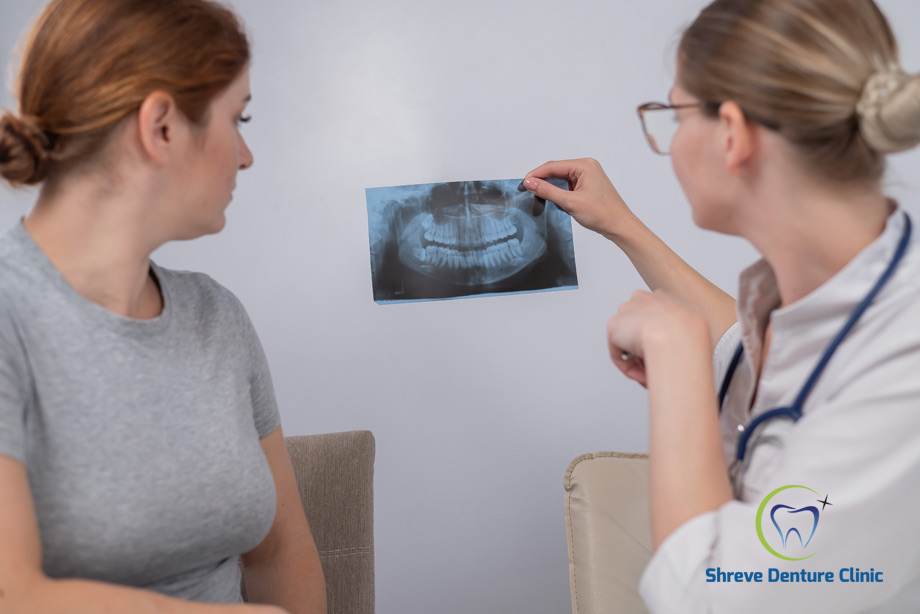
Speech and Everyday Function
Upper dentures allow clearer speech after a short adjustment period of 1 to 2 weeks. The palate coverage provides a stable surface for the tongue to press against when forming sounds. Some patients notice a slight lisp at first, but this resolves quickly with practice. Proper dental care and cleaning and maintenance of your dentures daily also keeps the fit consistent and speech clear.
Lower dentures create more speech challenges because the denture moves when the tongue moves. Sounds like “s,” “sh,” “z,” and “th” become difficult when the denture shifts position. Eating also presents more difficulty with a lower denture. Chewing forces push the denture downward and backward, which can cause it to dislodge during meals. Unlike traditional dentures on the upper arch, lower replacement teeth lack suction, which gives the upper denture a clear functional advantage.
Solutions for Lower Denture Stability
Implant-supported snap-in dentures solve the lower denture stability problem. A dentist or dental surgeon places two implants into the lower jawbone. These two implants placed in the front of the jaw are connected to a bar or ball attachments, and the denture snaps onto these implants for a secure hold. This dental restoration is called an “overdenture” and produces a result that feels like natural teeth during eating and speaking. For patients who want even greater stability, four to six implants provide a fixed option where a crown is placed on each implant — the most costly option but also the most secure. Unlike partial dentures vs. complete dentures, which use clasps that secure the prosthetic to adjacent teeth, implant overdentures anchor directly into bone for superior retention.
Some overdentures are made with special internal retention clips that lock the denture onto the implant bar, enabling the denture to stay firm without adhesive. The denture is still removable for cleaning, so you can remove the denture without removing the implants themselves. This approach makes the lower arch much more stable than a traditional removable denture and eliminates the gaps in your smile that cause embarrassment.
Upper dentures rarely need implant support because the palate suction provides adequate retention. However, patients missing all of your upper teeth who experience a strong gag reflex may benefit from an implant-supported upper denture. This option leaves the palate open, which restores taste sensation.
At Shreve Denture Clinic, Kristin Shreve Swayze, DD, provides expert guidance on whether implant-supported dentures are the right choice for your situation. Your dentist or periodontist offers implant replacement options if you are missing upper or lower teeth and want them teeth individually replaced with a crown on each implant.
Our clinic also provides clasp-retained partial dentures alongside traditional and removable denture solutions to restore your smile and match your budget.
Upper vs. Lower Dentures: Comparison Table
The table below summarizes the key differences between upper or lower teeth replacement across 5 important categories.
| Feature | Upper Denture | Lower Denture |
| Primary Support | Suction via palate (roof of mouth) | Rests on lower gum / bone ridge |
| Stability | High | Low (often “floats”) |
| Shape | Full plate (covers palate) | U-shaped (horseshoe) |
| Common Issues | Gagging, reduced taste | Slipping, sore spots, movement |
| Need for Implants | Rarely required | Highly recommended (snap-in) |
Key Takeaway: Which Denture Is Harder to Wear?
Lower dentures are harder to wear and manage than upper dentures. The lack of suction, faster bone loss, tongue interference, and limited surface area all work against lower denture stability. Upper dentures benefit from the palate’s large surface area and natural suction, which makes them more secure and easier to adapt to. Whether you need tooth replacement for either the upper or lower jaw, the right type of denture depends on your bone density, the number of natural teeth remaining, and your personal comfort goals.
A free consultation with a qualified dentist or denturist helps you understand which denture option fits your mouth, lifestyle, and budget.
Get Expert Upper and Lower Denture Advice in Leamington, Ontario
Shreve Denture Clinic helps patients across Leamington, Kingsville, Essex, Harrow, and surrounding Essex County communities find the right denture solution. Whether you need a new upper denture, a lower denture with implant support, or a denture reline to restore your current fit, our team provides personalized dental care backed by over 85 years of combined experience.

No referral is necessary, and all consultations are free. Call 1-519-322-5900 or visit shrevedentureclinic.com to book your appointment today.